Thursday, 22 March 2012

Pyrochlore quantum spin ice?

Is the Yb2Ti2O7 pyrochlore a quantum spin ice?
R. Applegate, N. R. Hayre, R. R. P. Singh, T. Lin, A. G. R. Day, and M. J. P. Gingras
ArXiv 1203.4569 (2012)
Specific heat, C(T ), per mole of Yb for the model parameters in Ref. [18], in units of the Boltzmann constant
kB, calculated via NLC (up to 4th order NLC together with Euler extrapolations) are compared with experimental data
for Yb2Ti2O7. The black circles are data from Ref.

Wednesday, 21 March 2012

Quantum plasmons in NPs

Plasmons go quantum

F. Javier García de Abajo
Nature 483, 417 (2012)
a, In particles larger than about 10 nanometres, plasmons emerge as collective oscillations of a gas of conduction electrons, and have a frequency that is uncertain (double-headed arrow) because of collisions among the electrons and between the electrons and the particles' atomic lattice. b, In particles smaller than 10 nm, plasmons are associated with quantum electron transitions between occupied and unoccupied energy levels. As a result, the plasmon frequency and its uncertainty, which Scholl et al. accurately measured, are larger than those for bigger particles.

Quantum plasmon resonances of individual metallic nanoparticles.
Jonathan A. Scholl, Ai Leen Koh & Jennifer A. Dionne
Nature 483, 421 (2012)
Comparison of experimental data with quantum theory. Experimental, EELS-determined localized surface plasmon resonance energies of various Ag particle diameters are overlaid on the absorption spectra generated from the analytic quantum permittivity model (a) and the DFTderived permittivity model (b). The experimental bulk resonance energies are
also included (grey dots) along with the theory prediction (grey line). Classical Mie theory peak prediction is given by the dashed white line. The experimental data begin to deviate significantly from classical predictions for particle diameters smaller than 10nm. Horizontal error bars represent 95% confidence intervals, as calculated through curve fitting and bootstrapping techniques.

Spin thermoelectric effects

Spin Caloritronics: Electron spins blow hot and cold.
Sebastian T. B. Goennenwein and Gerrit E. W. Bauer
Nature Nanotech. 7, 145 (2012)
Thermoelectrics with a spin.

Direct observation of the spin-dependent Peltier effect.
J. Flipse, F. L. Bakker, A. Slachter, F. K. Dejene and B. J. vanWees
Nature Nanotech. 7, 166 (2012)

Concept of the spin-dependent Peltier effect. a) A pure spin current is sent through a non-magnetic metal (N)/ferromagnetic metal (F) interface. In N, the Peltier heat current for both spin species is equal. As the flow direction in the two spin channels is opposite, the total heat current is cancelled. In F, the heat currents are different for majority and minority carriers, leading to a net heat current from the interface into F or vice versa. b), Generated temperature profile in the system. Spin relaxation in F reduces the spin current, thereby decreasing the induced heat current.

Microhelix magnetized coils

Magnetic Microhelix Coil Structures.
Elliot J. Smith, Denys Makarov, Samuel Sanchez, Vladimir M. Fomin, and Oliver G.Schmidt
Phys. Rev. Lett. 107, 097204 (2011)

Dynamics of radial-magnetized microhelix coils.
Vladimir M. Fomin, Elliot J. Smith, Denys Makarov, Samuel Sanchez, and Oliver G. Schmidt
Phys. Rev. B 84, 174303 (2011)
Obtainable magnetization orientations of a helix coil. Micromagnetic simulations carried out on planar and coiled-up magnetic strips: (a) Initial magnetization is inplane, perpendicular-to-strip (left); hollow-bar-magnetized helix coils can be created (right). (b) Initial magnetization is in-plane, parallel-to-strip (left), results in a corkscrew-magnetized coil (right). (c) An out-of-plane magnetized strip (left) assembles into a radial-magnetized coil (right).

Magnetodielectricity in a Manganites

Near-Room-Temperature Colossal Magnetodielectricity and Multiglass Properties in Partially Disordered La2NiMnO6.
D. Choudhury, P. Mandal, R. Mathieu, A. Hazarika, S. Rajan, A. Sundaresan, U.V. Waghmare, R. Knut,O. Karis, P. Nordblad, and D. D. Sarma
Phys. Rev. Lett. 108, 127201 (2012)

See also:
Charge Hopping in Glassy Magnets.
Gavin Lawes

Physica 5, 35 (2012)
(a) FC ZFC DC magnetization data, with an applied magnetic field (H) of 20 Oe. (b) The imaginary parts of AC susceptibility, with H =4 Oe. (c) Same as in (b), but focusing on the low-temperature region. (d) ZFC data with and without an intermediate wait (TW) at 25 K for 6000 seconds, showing distinct memory effects at TW as illustrated in the inset with a difference plot.


Role of MCD on optical magnetic recording

Role of Magnetic Circular Dichroism in All-Optical Magnetic Recording.
A. R. Khorsand, M. Savoini, A. Kirilyuk, A.V. Kimel, A. Tsukamoto, A. Itoh, and Th. Rasing
Phys. Rev. Lett. 108, 127205 (2012)
Illustration of multiple-shot switching with CP excitation pulses. In the center of the excited area, both magnetic states can switch because of the high fluence, while at the edges (i.e., between the dashed borders) helicity-dependent switching occurs and therefore a single domain state is formed. Hence, by sweeping multiple CP excitation pulses over thesurface, a large area can be switched.

Size dependence of dipolar ineractions in NPs

Size dependent dipolar interactions in iron oxide nanoparticle monolayer and multilayer Langmuir–Blodgett films.

Matthias Pauly ,  Benoit P. Pichon ,  Pierre Panissod ,  Solenne Fleutot ,  Pedro Rodriguez ,  Marc Drillon and Sylvie Begin-Colin
J. Mater. Chem. 22, 6343 (2012)

Magnetization measurements of NP5, NP9 and NP16 dispersed in a polymer matrix: (a) hysteresis loops at 5 K, (b) ZFC/FC curves measured under a permanent field of 75 Oe and (c) imaginary part of the AC susceptibility. Inset: inverse of the
blocking temperature as a function of the measurement time (dots), and fits to the Néel–Brown law (lines).

Monday, 19 March 2012

Vortices in spherical shells

Out-of-surface vortices in spherical shells.
Volodymyr P. Kravchuk, Denis D. Sheka, Robert Streubel, Denys Makarov, Oliver G. Schmidt, and Yuri Gaididei
ArXiv 1202.6002 (2012)
All possible vortex states of the spherical surface. The left column demonstrates the model out-of-surface magnetization
distribution given by Eq. (4) for all possible combinations of polarities. The right graph shows the corresponding distributions of the phase. For the correspondence, we use the notation p1p2, e.g. "+1-1" means p1 = +1 and p2 = -1

Thursday, 15 March 2012

Perpendicular EB in ferrimagnet

Perpendicular exchange bias in ferrimagnetic spin valves.
F. Radu, R. Abrudan, I. Radu, D. Schmitz & H. Zabel
Nature Comms. 3, 715 (2012)

(a) Schematic view of a compensated AF interface. The interfacial energy is zero for this configuration, therefore no EB is allowed to occur. (b–d) A schematic view of a compensated hard ferrimagnetic interface in contact to a ferromagnet an…

Monopoles in FMs

Monopoles in ferromagnetic metals.
Gen Tatara, Akihito Takeuchi, Noriyuki Nakabayashi, and Katsuhisa Taguchi
ArXiv 1203.2709 (2012)

GMR manipulation with multiferroics

Room Temperature Electrical Manipulation of Giant Magnetoresistance in Spin Valves Exchange-Biased with BiFeO3.
Julie Allibe, Stéphane Fusil, Karim Bouzehouane, Christophe Daumont, Daniel Sando, Eric Jacquet, Cyrille Deranlot, Manuel Bibes, and Agnès Barthélémy
Nano Lett. 12, 1141 (2012)
Magnetoelectric multiferroics are attractive materials for the development of low-power electrically controlled spintronic devices. Here we report the optimization of the exchange bias as well as the GMR effect of spin valves deposited on top of BiFeO3-based heterostructures. We show that the exchange bias can be electrically controlled through a change in the relative proportion of 109° domain walls and propose solutions toward a reversible process.

Ferroelectric memories

Inside story of ferroelectric memories.
Vincent Garcia and Manuel Bibes
483279a.pdf (application/pdf Object)

See also the previous entry: Ferroelectric solid state memories
Binary and multilevel data storage. a, In a classical binary ferroelectric random access memory (FERAM), a bit of information, with a logic value of ‘1’ or ‘0’, is encoded in the up (red block) or down (blue block) polarization direction of the device’s constituent cells. In this 36-bit example, the bits are stored in 6 × 6 cells, each of which stores one bit. Electrical wires (grey) are used to apply voltages across the cells to write and read the cells’ polarization. b, Lee et al.3 describe a multilevel FERAM that can store three bits in a single cell. In this way, three-bit logic states (000, 001, 010, 011, 100, 101, 110 and 111) can be stored in each of 3 × 4 cells of a smaller 36-bit memory array. Each state corresponds to a specific configuration of domains of opposite polarization in the cells.

Wednesday, 14 March 2012

Bistability in atomic AF chains

Bistability in Atomic-Scale Antiferromagnets.
Sebastian Loth, Susanne Baumann, Christopher P. Lutz, D. M. Eigler, Andreas J. Heinrich
Science 335, 196 (2012)

Tuesday, 13 March 2012

Metallic nanodumbbells

Study of Nucleation and Growth Mechanism of the Metallic Nanodumbbells.
Galyna Krylova, Lisandro J. Giovanetti, Felix G. Requejo, Nada M. Dimitrijevic, Alesia Prakapenka,and Elena V. Shevchenko
JACS 134, 4384 (2012)

Altered magnetism in maghemite NP by Cu shell

Tuning the surface magnetism of gamma-Fe2O3 nanoparticles with a Cu shell.
R. D. Desautels, E. Skoropata, Y.-Y. Chen, H. Ouyang, J. W. Freeland, and J. van Lierop
Appl. Phys. Lett. 99, 262501 (2011)

Increased surface spin stability in gamma -Fe2O3 nanoparticles with a Cu shell
R. D. Desautels, E. Skoropata, Y.-Y. Chen, H. Ouyang, J. W. Freeland, and J. van Lierop 
J. Phys. CM 24, 146001 (2012) 

Field dependence of the interfacial Cu in Cu-coated c-Fe2O3 nanoparticles.
R. D. Desautels, Y.-Y. Chen, H. Ouyang, S.-C. Lo, J. W. Freeland, and J. van Lierop

J. Appl. Phys. 111, 07B518 (2012) 
Temperature dependence of the saturation magnetization (Ms, top) and the exchange bias loop shift, Hex, of the bare gamma-Fe2O3 and Cu(0.5 nm)/Fe2O3 nanoparticles. The inset shows typical M vs mu0 H behavior of the Cu(0.5 nm)/gamma-Fe2O3 nanoparticles

Magnetization distribution in an FeO NP by SANS

Quantitative spatial magnetization distribution in iron oxide nanocubes and nanospheres by polarized small-angle neutron scattering.
S Disch1, E Wetterskog, R P Hermann, A Wiedenmann,U Vainio, G Salazar-Alvarez, L Bergström and Th Brücke
New Journal of Physics 14, 013025 (2012)
Purely nuclear SANS of spherical and cubic nanoparticles (scaled by 0.5 for display). Lines indicate fits to the model depicted in the right inset. Left inset: 10 deg sectors used for integrating the two-dimensional (2D) scattering.

Monday, 12 March 2012

Reversal of individual Co islands

Magnetization Reversal of Individual Co Nanoislands.
S. Ouazi, S. Wedekind, G. Rodary, H. Oka, D. Sander, and J. Kirschner
Phys. Rev. Lett. 108, 107206 (2012)
Island size dependence of the energy barrier Delta E. (a) The blue curve is a linear fit Delta E_lin=K(N-N0)The red curve shows the calculated energy barrier for domain wall formation Delta E_dw= 4 sigma sqrt(AK).
.

Fe3O4–Au NPs for biomedical applications

A Simple Approach to the Design and Functionalization of Fe3O4–Au Nanoparticles for Biomedical Applications.
A. Narsi Reddy, K. Anjaneyulu, Dr. Pratyay Basak, Dr. N. Madhusudhana Rao and Dr. Sunkara V. Manorama
ChemPlusChem ASAP (2012)
A simple aqueous synthesis of a superparamagnetic and biofunctional nanocomposite system is described. Chitosan-stabilized Fe3O4 nanoparticles were synthesized at room temperature and the surface charge of these nanocomposites was exploited to prepare nanoparticles decorated with gold.
 

Friday, 9 March 2012

Tunnel current induces instability in Co NPs

Magnetic instability induced by tunnel current in single Co nanoparticles.
F. T. Birk, W. Jiang, D. Davidovic
ArXiv 1107.2850 (2012)
A: SEM of a typical sample. The scale bar indicates 0.2μm. B: Sketch representing the sample fabrication process. C-E: Current versus voltage in samples 1-3 (top to bottom), at 60mK and 0T.

Thursday, 8 March 2012

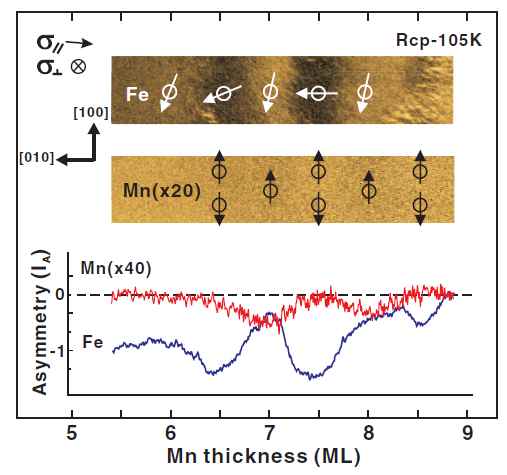
EB induced by biquadratic interface exchange coupling

Flipping magnetization induced by noncollinear ferromagnetic-antiferromagnetic exchange coupling.
B. Y. Wang, C. H. Chuang, S. S. Wong, J. J. Chiou, W. C. Lin, Y. L. Chan, D. H. Wei, and Minn-Tsong Lin
Phys. Rev. B 85, 094412 (2012)
The Fe and Mn domain images as functions of tMn, taken at 105 K, at the region where the Fe film reveals the flipping magnetization (indicated by white arrows). The Mn layer yields nonvanishing IA at integer layer thickness and
approaches to zero value at half-integer layer thickness. A very small IA signal for the Mn layer could be attributed to a nearly orthogonal included angle between the photohelicity and in-plane magnetization.

Charge and spin currents resulting from thermal gradient

Local Charge and Spin Currents in Magnetothermal Landscapes.
Mathias Weiler, Matthias Althammer, Franz D. Czeschka, Hans Huebl, Martin S. Wagner, Matthias Opel, Inga-Mareen Imort, Günter Reiss, Andy Thomas, Rudolf Gross, and Sebastian T. B. Goennenwein
Physics 5, 29 (2012)

Spin-Heat Vision
Roberto Myers, Joseph Heremans
Physics 5, 29 (2012)

(a) The scannable laser beam generates a local temperature gradient rT normal to the ferromagnetic thin film plane. The dc voltage VANE which arises due to the anomalous Nernst effect depends on the local magnetization M at the position ðx; yÞ of the laser beam. All investigated samples are patterned into 80 microm wide and 900 microm long Hall bars with contacts abeled as sketched. (b) VANE determined between contacts 2 and 4 as a function of the laser-spot position (x; y)and the external magnetic field magnitude H in a 50 nm thickCo2FeAl (CFA) film.

Optical activity in Magnetoplasmonic Nanodisks

High Magneto-Optical Activity and Low Optical Losses in Metal-Dielectric Au/Co/Au–SiO2 Magnetoplasmonic Nanodisks.
Juan Carlos Banthí, David Meneses-Rodríguez, Fernando García, María Ujué González, Antonio García-Martín, Alfonso Cebollada, Gaspar Armelles
Advanced Materials 24, OP36 (2012)
a) Sketch of the composition of the fabricated nanodisks. b) AFM image of a selected fabricated structure (15 nm Au/10 nm Co/20 nm SiO2/15 nm Au).

Wednesday, 7 March 2012

Magnetization reversal by laser pulses

All-optical magnetization reversal by circularly polarized laser pulses: Experiment and multiscale modeling.
K. Vahaplar, A. M. Kalashnikova, A. V. Kimel, S. Gerlach, D. Hinzke, U. Nowak, R. Chantrell, A. Tsukamoto, A. Itoh, A. Kirilyuk, and Th. Rasing
Phys. Rev. B 85, 104402 (2012)
(a) The magnetization evolution in Gd24Fe66.5Co9.5 after the excitation with σ+ and σ− circularly polarized pulses
at room temperature. (b) The averaged magnetization in the switched areas (∼5 μm) after σ+ and σ− laser pulses. (c) and (d) are results of multimacrospin simulations.

Friday, 2 March 2012

Nanotechnology on cosmetics: a review

Current status and future prospects of nanotechnology in cosmetics.
Albert Mihranyan, Natalia Ferraz, Maria Strømme
Progress in Materials Science 57, 875 (2012)
Examples of nanocarrier delivery vehicles

Wednesday, 29 February 2012

Review on Domain wall nanoelectronics

Domain wall nanoelectronics.
G. Catalan, J. Seidel, R. Ramesh, J. F. Scott
Rev. Mod. Phys. 84, 119 (2012)
Ferroelectric ‘‘closure stripes’’ predicted by atomistic simulations of ultrathin films.